5 Small Kitchen Storage Mistakes That Waste Your Space
Most advice about small kitchen storage assumes you can renovate. You cannot. You are working with whatever cabinets came with the apartment, a landlord who will not approve holes in the wall, and roughly four feet of usable counter.
The good news is that small kitchens usually are not short on space. They are short on reachable space. Here are the five mistakes that waste the most of it.
Looking for the products rather than the method? Under Sink Organizers That Clear A Standard P-Trap
1. Stacking without risers
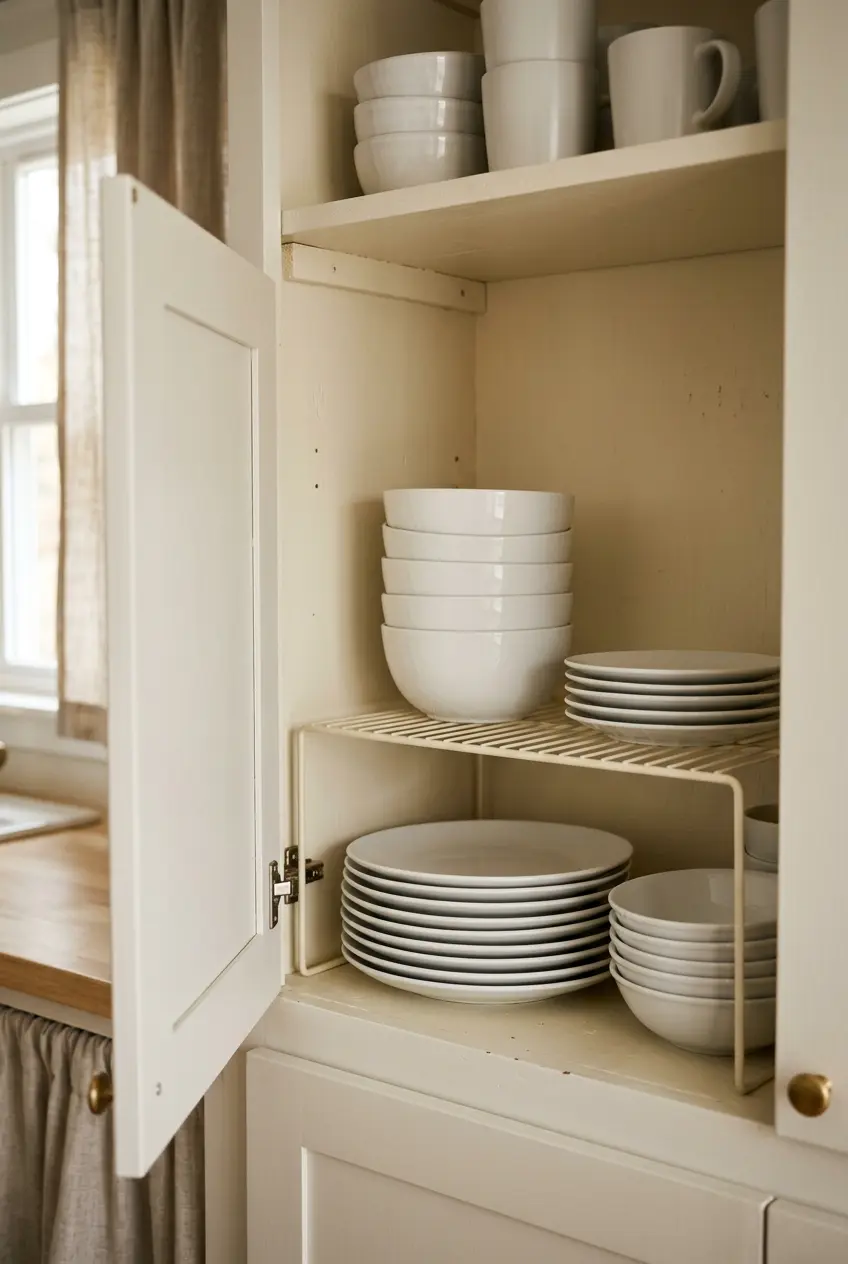
A standard cabinet shelf is about 12 inches of vertical space. A stack of plates uses four. The remaining eight inches are dead air you paid rent on.
The fix is not more shelves — it is a riser, a shelf insert, or anything that creates a second level inside the existing one. A single shelf insert in a plate cabinet typically recovers enough room for the bowls that were living on the counter.
Do this in the cabinets you open daily before anywhere else. The pantry can wait.
2. Leaving the backs of cabinet doors bare
Every cabinet door is a vertical surface you already own and are not using. In a small kitchen this is usually the single largest untapped area.
Door-mounted racks work best for flat, light things: cutting boards, foil and wrap boxes, spice tins, sponges, a small trash bag roll. They fail for anything heavy or deep — the door will sag on its hinges and eventually stop closing flush.
If you rent, use over-the-door hooks or adhesive rails rather than screwing into the door. A screw hole in a cabinet door is a deposit deduction.
3. Deep bins you cannot see into
Deep opaque bins feel efficient. They are storage graveyards. Anything past the front third never gets used, because retrieving it means unloading the bin onto the counter.
Two rules keep this from happening. Shallow beats deep for anything used weekly. And a bin taller than it is wide should be clear, or should hold exactly one category so you know what is in it without looking.
Deep bins are fine for one job: bulk backstock you touch once a month.
4. Storing daily pans up high
The overhead cabinet above the stove is prime real estate, and in most kitchens it holds the roasting pan used twice a year while the everyday skillet sits on the stovetop permanently.
Reorganize by frequency, not by category. Everything you touch daily belongs between hip and eye level. Things you touch weekly go above or below that. Anything seasonal goes in the highest shelf or the back of the deepest cabinet, where retrieval is annoying and that is fine.
This costs nothing and is the single highest-impact change in this list.
5. One junk drawer for everything
The junk drawer is not the problem. The problem is that it is undivided, so every item migrates into a single layer of chaos and you stop being able to find the thing you actually need.
A drawer divider — even a cheap expandable one — turns the same drawer into four small ones. The categories matter less than the fact that there are categories at all.
Where to start
Pick the cabinet you open most often. Apply mistake 4 first: move everything you use daily to eye level and push the rest up or back. Live with it for a week before buying anything.
Most people find that step alone frees up the counter, and it tells you exactly what you actually need to buy.